Wednesday, 28 March 2018

Mr. Zhi Yang awarded PhD degree

Delft, The Netherlands, 27 Mar 2018

Mr. Zhi Yang awarded PhD degree

On 26 March 2018, Mr. Zhi Yang successfully presented and defended his PhD thesis and was awarded with a Doctoral degree. Professor Stefan Uhlenbrook was his promotor and Dr. Yangxiao Zhou his copromotor.

The PhD research focused on

This study presents a multi-disciplinary approach for investigating the interactions between groundwater and surface water in the semi-arid Hailiutu catchment in the Erdos Plateau, Northwest China. The study consists of statistical detection of river flow regime shifts at the basin level; multiple in-situ measurements for quantifying groundwater discharges using hydraulic, hydrochemical and temperature methods at a local scale; analysis and simulation of impacts of different land use scenarios on groundwater and surface water interactions at the sub-catchment scale; and the quantification of temporal and spatial groundwater and surface water interactions with hydrochemical tracers and modelling methods at the basin scale.
The study found that the river flow consists of mainly groundwater discharges at all scales. The river flow regime has been intensively altered by human activities, such as the construction of reservoirs, water diversion, groundwater exploitation, and reforestation. Water use by plants and crops consumes majority of the precipitation. Groundwater sustains vegetation growth and feeds river discharges. The water resources and ecosystem management priority should reduce evaporative water uses by promoting dry resistant plant species for vegetating sand dunes and lower irrigation demand crops for socio-economic development. Furthermore, the Hailiutu River catchment must manage the groundwater recharge for water resource conservation and the maintenance of healthy ecosystems.

Free gift? China extends influence in Africa with $32M grant for regional HQ

(CNN)China raised eyebrows this month by announcing it will give the Economic Community of West African States (ECOWAS) a $31.6 million grant to build a new headquarters in Abuja, Nigeria.
Accepting the grant, the president of ECOWAS, Jean-Claude Brou, thanked China and confirmed the organization's commitment to promoting future ECOWAS-China cooperation. A press release said that Brou called this a mark of goodwill from China. 
But critics questioned the Asian economic powerhouse's motives for the donation, which positions it at the center of West African politics.
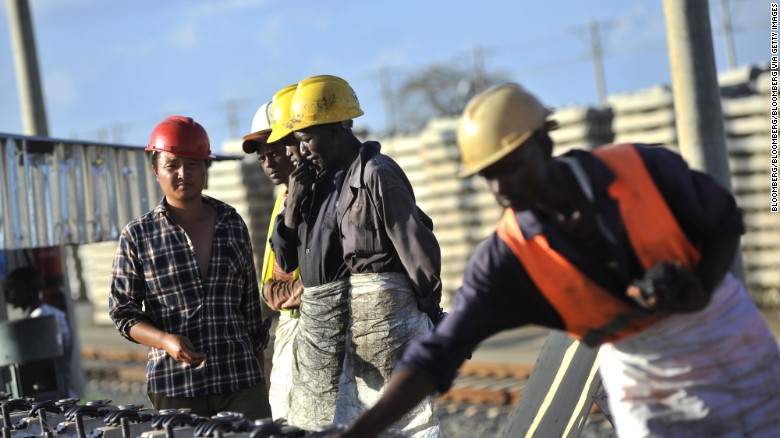
African, right, and Chinese workers, left, build railway track sections for the Mombasa-Nairobi Standard Gauge Railway (SGR) line in Tsavo, Kenya.
Earlier this year, a published report in the French daily, Le Monde, alleged that Beijing spied on the African Union through the computer systems it helped install. Citing anonymous sources, Le Monde reported that data was transferred from the AU systems in Ethiopia to its servers in Shanghai. China's foreign ministry called the Le Monde report "groundless accusations."  The AU called the report "baseless."
"People will interpret this as a symbolic expression of China's growing presence in Africa," says Ian Taylor, a professor in international relations and African political economics at the University of St. Andrews, in Scotland.
"But the real question is 60 years after independence (for most member states), why does ECOWAS think it's acceptable for a foreign power to build its headquarters?"
ECOWAS and the Chinese Ministry for Foreign Affairs did not respond to CNN's requests for comment.

Why did ECOWAS accept?

ECOWAS was established in 1975 to foster economic integration and collective self-sufficiency in West Africa.
Its 15 member states include one of Africa's biggest economies by GDP, Nigeria, causing Taylor and others to ask why ECOWAS isn't self-funding the facility. Had the members split the bill, it would have cost just over $2 million each.
Philip Olayoku, project manager at the Abuja-based Information Aid Network, says the official numbers are misleading and many countries in the grouping don't have cash to spare for such projects.
"For me, reliance on GDP is the wrong way to determine how well a country's economy is doing," he says. Corruption in many West African governments, he explains, means "funds that are accrued for national growth are often not where they need to be," impairing a country's ability to contribute effectively to bodies such as ECOWAS.
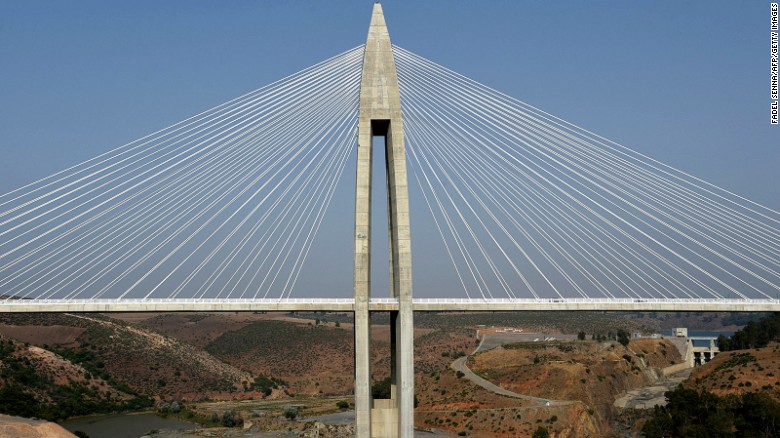
Trade and partnership deals between African countries and China have been steadily increasing in recent years. This summer saw the completion of Morocco's Mohammed VI Bridge, <a href="http://news.xinhuanet.com/english/2016-07/08/c_135496809.htm" target="_blank">a $72m project</a> built by Chinese development group Cover-Mbec.
Currently, ECOWAS' operations are spread across three buildings in the Nigerian capital, which both Taylor and Olayoku say are "outdated" and not fit for purpose. The China Development Bank Corporation will work with "an ECOWAS designated authority" to "verify records of account payments at regular intervals" throughout the construction process, according to ECOWAS.
That foreign supervision is necessary, Taylor says, shows "a general failing of the ECOWAS leadership." "They can't even be bothered to contribute to ECOWAS' budget," he says. In 2016, six nations had outstanding contribution arrears to ECOWAS. "What that means is either the organization will stop working or it will have to rely on foreign donors."

'No such thing as a free gift'

It's not the first time China has constructed buildings at the heart of Sub-Saharan African politics for free.
In 2012, it handed over the ultra-modern African Union headquarters in Addis Ababa, Ethiopia. With a price-tag of $200 million, it was China's largest aid construction project since the 1970s. In 2017, China broke ground on a fully-funded $58 million parliament in Brazzaville, Republic of Congo.
"Obviously, the (ECOWAS) building itself doesn't mean that China is going to extend its influence, but it does send a signal that China is positioning itself as a trusted friend of African presidents," says Taylor. "That influences all sorts of decision making processes ... there's no such thing as a free gift."
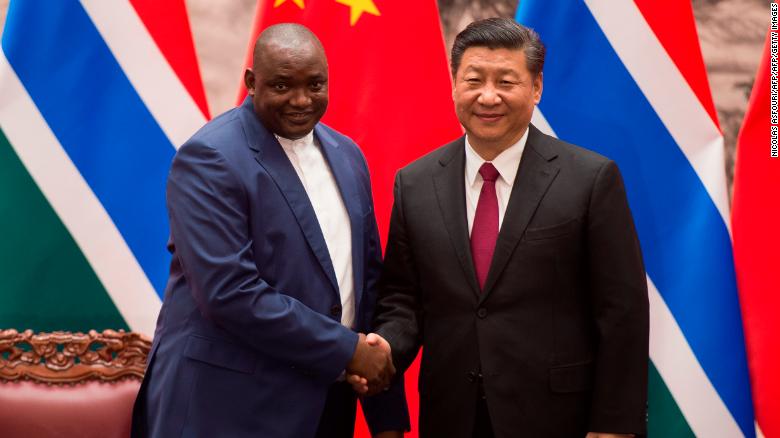
Gambia's President Adama Barrow with China's President Xi Jinping at the end of a signing ceremony at the Great Hall of the People in Beijing on December 21, 2017.
The two countries re-established diplomatic relations in 2016.
While Beijing defends its aid practices on the grounds they are neutral and respect recipient nations' sovereignty, Chinese money is not wholly unpolitical.
For example, African nations have long been a battle ground for China and Taiwan, officially the Republic of China, with Beijing providing aid and economic deals to nations which ditch Taipei and recognize the People's Republic of China instead. Today, in Africa, only Burkina Faso and Swaziland officially recognize Taiwan.
Furthermore, in 2016 the president of Sierra Leone, Ernest Bai Koroma, confirmed that the Communist Party of China (CPC) had agreed to build his ruling All People's Congress party a six-story headquarters in the capital of Freetown.

China becoming an aid power?

As China grows as a world power, its aid programs in general are expanding globally, too. A study published last year by AidData, a research lab at the College of William & Mary, found the size of Chinese aid assistance to be much larger than previously believed.
Earlier this month, China announced plans to form an international development cooperation agency to coordinate its global aid program. Previously China had no dedicated agency devoted to foreign aid, despite giving tens of billions of dollars in overseas assistance since 2000.
"The Chinese government actually considers the details of its overseas development programs to be a state secret," AidData executive director Brad Parks told CNN.
The AidData study found that at least 70% of China's overseas aid was sent to Africa from 2000 to 2014. While the report noted that "Chinese aid substantially improves economic growth," it also deemed the majority of spending less than effective and warned it may undermine Western efforts to use aid to promote democracy and political reform, at a time when the US is pulling back on overseas spending.
Giving developing nations buildings designed to help their political institutions prosper is part of that expanded aid program, says Aaron Tesfaye, a professor in political science at William Paterson University, New Jersey.
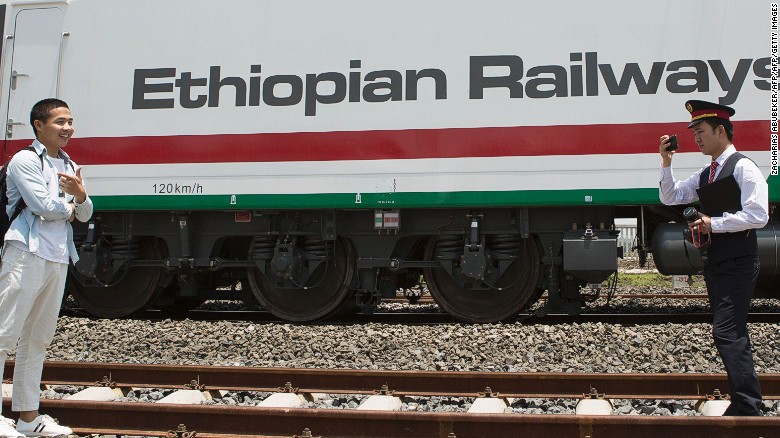
Chinese employees of the new railway which will link Addis Ababa to Djibouti take pictures in front of the Chinese-made Ethiopian trains in Addis Ababa on September 24, 2016.
"We are now seeing China being a responsible nation, with peacekeeping forces in Darfur and Mali," he says. "So I can see where financing ECOWAS is a step forward in that responsibility."
Taylor agrees that in some African nations, such as Ethiopia where China has built a metro in the capital city and connected the land-locked country to the ocean via the Addis-Ababa-Djibouti Railway, as well as built the AU headquarters, most people see Chinese construction projects as "positive."
"The cultural power of China in the world today is a reality and something that is being embraced, given its economy cannot be ignored," says Olayoku. "I don't see anything wrong with China building the ECOWAS headquarters, as long as it does not impose its values."
CNN's James Griffiths also contributed to this report.
  •  

    Tuesday, 27 March 2018

    Kenya columnists quit Nation Media Group over 'meddling'

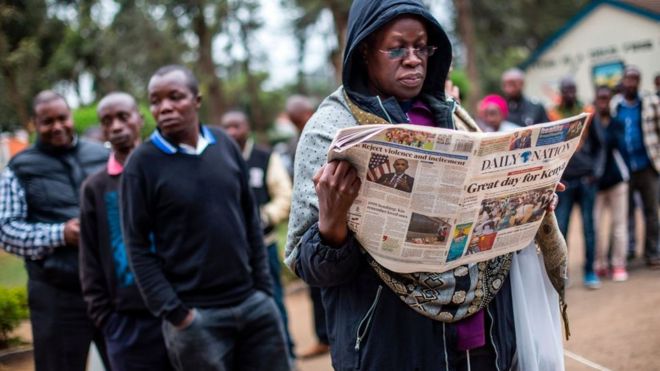
    A man reads a newspaper with the headline 'Great day for Kenya' while waiting to cast their ballot in the general elections at a polling station in Kilimani Primary School, Nairobi, Kenya, on August 8, 2017 during the nationwide elections
    The Nation Media Group says it was founded on the "bedrock" of editorial independence GETTY IMAGES
    27 March 2018
    Eight leading newspaper columnists have resigned from Kenya's largest media group, citing a "loss in editorial independence".
    In a joint statement, they suggested government interference in the Nation Media Group (NMG).
    NMG said it regretted the columnists' position and it believed in "independence, fairness and balance".
    The resignations come at a time when the government has been accused of cracking down on the media.
    In January, several of Kenya's most popular TV stations, including NMG-owned NTV, were pulled off-air for their planned coverage of the mock presidential inauguration of opposition leader Raila Odinga.
    Mr Odinga rejected Mr Kenyatta victory in elections, saying the poll was rigged.
    In their resignation letter, the columnists protested against the firing of managing editor, Denis Galava, over an editorial critical of Uhuru Kenyatta's presidency, and the refusal to renew the contract of popular cartoonist Gado, who had previously taken aim at the government.
    The resignations were clearly coordinated, and bring into question the editorial independence of NMG, including the Daily Nation, Kenya's biggest circulating newspaper, reports the BBC's Ferdinand Omondi from the capital, Nairobi.
    For decades, the Daily Nation was hailed as an authoritative and truthful newspaper, but in the last few years several of its senior journalists have either been fired or have resigned after clashing with the government, he adds.
    Those who quit include George Kegoro, executive director of the Kenyan Human Rights Commission; Lynne Muthoni Wanyeki, Africa director of the Open Society Foundation, Nic Cheeseman, professor of democracy at a UK university and Rasna Warah, an author.
    "I resign to protest the growing infringement on media freedom. I resign to show solidarity with the voices that have been silenced. I resign because we must live our beliefs," Cheeseman said.
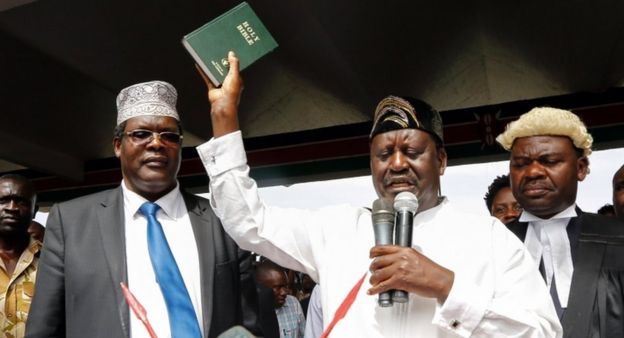
    Raila Odinga raises a bible as he "takes an oath" during an unofficial "swearing-in" ceremony in Nairobi on 30 January 2018.Image copyrightEPA
    Image captionRaila Odinga declared himself the "people's president" during his mock swearing-in ceremony on 30 January
    The statement also alleged that the general manager of NTV station, Linus Kaikai, was fired by NMG after he "spoke of collusion between" the government and NMG's managers to censor the mock swearing-in of opposition leader Raila Odinga.
    "A worrying pattern has emerged where it appears the executive government is able to influence who works for or contributes to NMG," the statement said.
    "Censoring individual columnists signals official intolerance for dissenting views and suggests executive willingness to go to any length - even co-opting editors - to achieve its aims," it added.
    In its response, the media group said it was founded on the "bedrock" of media freedom and editorial independence.
    "We wish to reiterate that overall we have honoured our obligation to respect their views, and did not tamper with their positions except to correct basic errors," NMG said.

    MY LUO NATION

    By Nelson Guga-Facebook Post, 27.03.2018
    MY LUO NATION: People who understand the Luo Nation’s psychopolitical structure know that Dr. Miguna Miguna, the NRM General, is in the making. Well, the unfolding political development and endless controversies surrounding Dr. Miguna are not good news for individuals, mainly political leaders and their followers, keen on maintaining the status quo and the political establishment in ODM. It cannot be lost on observers that there is no chemistry between Raila Odinga, the ODM leader and arguably the latest defector to the Jubilee Government, and Dr. Miguna. The bad blood between the two is the result of latter’s scathing attack on the former Prime Minister in his tell-it-all book: Peeling Back the Mask.
    Be that as it may, the Luo Nation is facing interesting times going forward. First, Raila Odinga who has been at the center of the community’s political formation for over three decades is facing his sunset. His advancing age, though a natural process, has erased his chances of ever becoming Kenya’s president. The sacrifices and the emotional investment that the community has put in the making of President Raila have not paid off nor has Mr. Odinga’s historic handshake on March 9 showed any promise. It is undoubtedly an agonizing moment for the community.
    Secondly, there are no clear signs of a political heir apparent within the Odinga family hierarchy. The scions of both Mr. Odinga and his elder brother Dr. Oburu Oginga have not expressed overt interest in the community’s politics let alone the country’s, and it is unlikely that they will command any considerable influence in the community’s politics even if they debuted. Unlike his scions, Mr. Odinga had taken an active role in the country’s politics when he was hardly 40. The lack of a clear successor within the rank of the Odinga family may not be a good thing for a man who has straddled Kenya’s political landscape like a colossus and for decades.
    Third, the current crop of Luo politicians appears to lack vision and an understanding of what post-Odinga political dispensation may offer. They also seem to be ignorant of the Luo political psyche. It is unlikely that the Luo community will cease to identify with leaders who exhibit courage, might, and exuberance. As Mr. Odinga takes his quiet exit, there is talk about the community rallying behind Deputy President William Ruto’s quest for the highest office on the land or Mombasa Governor’s Hassan Joho’s possible presidential bid. Like Odinga, the two politicians possess what the Luo believes is the essential quality of a good leader: Courage!
    But something is missing! Kenya’s politics is ethnocentric. There will be a local gap in the community’s leadership when Mr. Odinga bows and whoever will replace him will have to embody that fundamental quality of courage. The Luo community won’t allow a ‘coward’ (I don’t know what that word means in the political context it has been used lately) to fill Mr. Odinga’s ‘holy’ shoes. Cowardice is not Luoism. Too much humility is not Luoism even though history has rewarded it. In this context, I hypothesize that Dr. Miguna Miguna is a potential Luo ethnic kingpin in the post-Odinga era.
    Dr. Miguna casts a rare image of what constitutes the Kenyan politician. In fact, he is a significant departure from the quintessential Kenyan politician. Unlike any politician in recent history, Dr. Miguna has exhibited unusual courage that is primary in challenging the status quo. He has a clear conviction of the kind of a nation he wants. On many occasions, he has been an unapologetic critic of electoral and social injustice. Unlike many Kenyans, Dr. Miguna is, arguably, the only remaining vocal Kenyan who believes that the Kenyan dream can still be reclaimed. These audacious qualities have earned him both friends and foes, but have identified him with the Luo political psyche.
    Dr. Miguna’s brazen and bare-knuckled approach to political events puts him on a higher pedestal to take the Luo leadership mantle. But this is hypothetical. How he achieves this dream will depend on how he plays his cards going forward. As they say, the best soldier is he who knows when to retreat. With a peerless intellectual acumen, reckless audacity, clarity of thought, and a penchant for political utopianism, I hope Dr. Miguna lives to become the building stone that the builders rejected.

    Why Kenya is ripe for a new crop of leaders

    Joho
    Happier days. Governor Ali Hassan Joho and President Uhuru Kenyatta during the Mombasa International Trade Fair in September 2016.
    23.03.2018

    By GABRIEL DOLAN
    More by this Author
    Exactly 12 months ago, Mombasa came to a halt amidst a standoff between President Uhuru Kenyatta and Governor Hassan Ali Joho.
    Those of us who spent up to three hours in the resulting traffic jam have bitter memories of the day Joho was prevented from attending the presidential reopening of a footbridge and launching of a ferry.
    Joho’s bravado made him a hero and secured his re-election.
    GARBAGE
    If a week is a long time in politics, then a year must be a generation.
    Joho was abroad on another trip to find a solution to the garbage and sanitation disaster that is Mombasa, but he found time to tweet his support for the March 9 Harambee House handshake between Mr Kenyatta and opposition leader Raila Odinga.
    It is unlikely, however, that he was familiar with the contents of the package deal but if Baba amesema (Father has said), then that suffices.
    ADDICTED
    When Deputy President William Ruto visited the Coast last weekend, the rush by Orange Democratic Movement MPs to embrace and endorse him for 2022 could have been scripted from a soap opera.
    But Kenyan politics is a soap scripted to keep you watching, talking and addicted.
    It is a constantly changing series of scenes, games and plots that is all about self-interest and not about you and your future.
    FRIENDSHIP
    Forgive the scepticism but March 9 may go down as the day Kenya waved goodbye to opposition politics and ushered in a new era of grand corruption and land grabbing.
    The handshake may reflect a new dawn and beginning but is more likely to represent the beginning of the end of dynastic, ethnic politics.
    The caution with which Kenyans have received the new-found friendship indicates they know we have been here before and will not be fooled.
    HOLY WEEK
    Some pundits may even question if Cambridge Analytica did not engineer the Harambee House meeting as well as everything else around the 2017 election.
    Put another way, as we approach the Holy Week, the words of Jesus that ‘unless a grain of wheat falls into soil and dies it remains a single grain, but if it dies it bears much fruit (John 12:24)’ reverberate.
    INTEGRITY
    At a moment when all seems hopeless, bleak and depressing, as the seed of the first generation of politicians dies, a people’s movement may well emerge that may bear much fruit and guide us on to the next stage.
    There is an urgent need for people of integrity, ability and position to charter that new way forward.
    The lack of decency, consistency, honour and respect in public life is frightening.
    NEW GAMES
    Muted media that allow the Executive to determine who writes and what content can be published must be resisted and exposed.
    Kenyans have been fooled too many times and will not allow the same cast to continue with new games.
    Mr Kenyatta and Mr Odinga have made peace. For that, the nation sighs with relief. That perhaps is their contribution towards change.
    JUSTICE
    They must now stand back from the ashes and the division that they and their followers have created and allow another generation to unite and build the nation, revamp its institutions and guarantee social justice for the poor.
    That new beginning is also the message of the Christian Cross and Resurrection.
    Fr Dolan is a Catholic priest based in Mombasa. gdolan54@gmail.com @GabrielDolan1

    A Kenyan author examines his life and times in 'Wrestling With the Devil'

    Ngugi wa Thiong’o is author of
    BY KARAMAGI RUJUMBA - 24.03.2018
    In 2013, five of the more than 5,000 Kenyans tortured in detention camps during the fight to reclaim their land and self-rule from the British won a landmark ruling in the high court of the United Kingdom, which ordered its government to pay 19.9 million pound sterling in costs and compensation to those who suffered in its detention camps in Kenya.
    Yet, William Hague, the then British foreign secretary told the House of Commons that his government would continue to deny liability for the actions of its colonial administration in Kenya (1895-1963) and would defend itself against claims brought from other former colonies. Such is the nature of the boldface cognitive dissonance that typified the British colonial experiment around the world.

    "WRESTLING WITH THE DEVIL: A PRISON MEMOIR"
    By Ngugi wa Thiong’o
    The New Press ($25.99)

    Ngugi wa Thiong’o, the acclaimed writer, scholar and playwright, lived under the British colonial regime in Kenya for the first 25 years of his life. In “Wrestling With the Devil: A Prison Memoir,” Mr. wa Thiong’o, currently a Distinguished Professor of English and Comparative Literature at the University of California, Irvine, adds yet another important book to his literary canon, where he deconstructs the language of colonialism, as much as he continues pounding away at the ills of capitalism, religion and the neocolonial estate as tools of subjugation.
    In colonialism, language is the first victim. In Kenya, for example, the elderly victims recently compensated by Britain were called freedom fighters of the Kenya Land and Freedom Army. The white British settlers derisively called them Mau Mau rebels. The history and culture of this epic battle between the white settlers who saw Kenya and much of their African colonies as getaways for their sordid trysts — and the awakening of the oppressed Africans to wrestle colonial rule off them is one of the running themes so well documented in this book.
    It is at once a gripping account of endurance through the mental torture that is detention without trial, an indictment of the British colonial system and the savage ways in which white settlers crushed the spirit of all aspects of Kenyan life. Ultimately, it is a book on the act of writing and how the transcendent power of art can itself be a form of defiance.
    “I remind myself that the state has sent me here for my brain to melt into a rotten mess, and suddenly I feel the call to spiritual battle against its bestial purposes,” writes Mr. wa Thiong’o.
    Culled from the notes of a previous book, “Detained: A Writer’s Prison Diary,” published in 1982, the drama in “Wrestling With the Devil,” revolves around the struggle to be creative within the confines of the humdrum nature of prison life, a flashback on the events and activities that landed him in prison, and a look at how the injustices of colonialism continued well after its official end in Kenya.
    Detained without trial by the Kenyan government from Dec. 30, 1977, to Dec. 12, 1978, the author wrote “Devil on the Cross,” in his native language, Gikuyu, “as a challenge to myself, a way of affirming my faith in the possibilities of the languages of all the different Kenyan nationalities, languages whose growth as vehicles for people’s struggles and development had been actively suppressed by the British colonial regime.”
    Narrated as a flashback, Mr. wa Thiong’o’s memoir opens on the night he is released from the infamous Kamiti Maximum Security Prison, where he was sentenced. There, he joined other political prisoners after the authoritarian one-person, one-party rule of the government of Kenya at the time banned a community theater project, for which he co-authored a play, “Ngaahika Ndeenda.”
    It was later translated into English as “I Will Marry When I Want,” and the state feared the play was an effort in community organizing as much as it was meant to awaken the consciousness of the masses to the rampant corruption and cynicism that undergirded the state of postcolonial Kenya.
    “At midnight, December 30, 1977, they took me from my home and led me to Kamiti Maximum Security Prison in chains. For a whole year, I was to remain in cell 16 wrestling with multifarious demons in the dry wilderness of Kamiti Prison, contemplating the two dialectically opposed traditions of Kenyan history and culture and colonial aesthetics. They had raised colonial Lazarus from the dead,” he writes. “Who will bury him?”
    Colonial Lazarus lives on through the corruption of the best, the once gallant freedom fighters who took on the oppressor only to become oppressors themselves. Mr. wa Thiong’o’s ideological leanings against capitalism and religion as tools of the colonizer drip off these pages. And yet as one considers the state of modern Africa, one wonders whether the colonial project has ever truly ended.
    Karamagi Rujumba, a former Post-Gazette reporter, was born in Kenya and grew up in Uganda. He lives on the North Side. karamagi.rujumba@gmail.com.

    Monday, 26 March 2018

    Miguna Miguna spends night at JKIA in Nairobi

    Miguna Miguna
    Miguna Miguna. He landed in Nairobi on March 26, 2018. FILE PHOTO | NATION MEDIA GROUP
    27.03.2018


    By HARRY MISIKO
    More by this Author
    Fiery lawyer and self-declared National Resistance Movement general Miguna Miguna on Monday spent the night in the cold at Jomo Kenyatta International Airport in Nairobi.
    This was after he flatly rejected government’s attempts to re-deport him to Dubai, United Arab Emirates, a country in which he said he was not born and has no relatives or business associates.
    DRAMA
    The government rejected Dr Miguna’s return to Kenya and attempted to re-deport him to Canada after a nine-hour stand-off at the airport.
    But Mr Miguna refused to board the Dubai-bound Emirates flight, triggering probably the most dramatic scenes ever witnessed at JKIA in recent days.
    “I am not going anywhere….where is my luggage? Where is my passport? You cannot take me from my country by force,” he remonstrated as the commotion delayed Flight EK 722 bound for Dubai. 
    So violent were the scenes that the pilot of the plane took time to listen to the hostile passenger police had bundled into his craft.
    “I’m a Kenyan citizen by birth,” he told the attentive pilot, whose name the Nation could not immediately establish.
    “These court orders say I must be in this country,” he went on as he brandished High Court orders that directed his return to Kenya after he was violently deported to Canada.
    “So why are they pushing you in,” the pilot enquired.
    “Because of politics,” Dr Miguna responded. “They are scared of me."
    'NO WAY'
    He proceeded to give reasons why he would not allow the pilot to take off with him.
    "Now you, as captain, is (sic) not allowed to fly me anywhere against my will," he said.
    "First of all, I don’t have a passport, secondly I didn’t book your plane, thirdly I don’t have status in Dubai … so how am I gonna go to Dubai? I don’t live in Dubai, I don’t work in Dubai, I have no connections to Dubai. So I’m not going to Dubai.”
    He wrapped up his account to the pilot and his passengers with a call to action to the police, who had attacked and chased away journalists: “Let them kill me… Let them kill me… let them go ahead and do it.”
    “They cannot chase me like a pig when I have court orders. I was born here… some of these guys were not born here… they are just thugs that have been hired. They have chased the media like rabbits. They are shooting at the media.”
    Dr Miguna had been forcibly whisked to the aircraft by a contingent of about 40 police officers in full view of ODM leader Raila Odinga and his lawyers John Khaminwa, Cliff Ombeta and Julie Soweto. 
    Another group of officers laid siege at the airport, beating up journalists to scare them from capturing the drama.
    Dr Miguna was grabbed and literally carried to the aircraft that had been delayed for the purpose.
    More follows.