Saturday, 18 August 2018

H.E RAILA ODINGA’S MESSAGE OF CONDOLENCE ON THE PASSING OF DR. KOFI ANNAN:


AUGUST 18, 2018
I am profoundly shocked to learn of the passing of Africa’s top diplomat, former UN Secretary General Kofi Annan.
I extend sincere condolences to the family and friends of Dr. Annan and the U.N fraternity.
In Kenya, we retain fond memories of Dr. Annan as the man who stepped in and saved the country from collapse following the 2007-2008 post-election violence. Much remains to be done of the plan he proposed for the country as a road map to lasting peace and stability and it is my hope that we could do it in his honour.
I wish to express deep gratitude and appreciation of Dr. Annan for his dedicated and tireless work in stabilizing the world and encouraging Africa to aspire to higher ideals of democracy, respect for human rights and sound governance as the path to sustainable peace and economic development.
More than any other UN Secretary General, Annan best understood pushed the world to see the importance of human rights to peace, security, humanitarian affairs, economic and social development. His death is a major blow to the push for respect of human rights across the globe.
The world will always remember and honour Dr. Annan for what became known as “the Annan Doctrine” in which he made it clear that the need to respect sovereignty cannot be used as a shield by governments to brutalize their own citizens and that the international community has a right to intervene, when governments fail to protect the lives of their citizens. That will remain a pillar of hope for many people across the world for generations to come if it can be adhered to. May he rest in eternal peace.
H.E. RAILA ODINGA;
AUGUST 18, 2018.
SOURCE

The day I left office, my phone literally ceased to ring


By BITANGE NDEMO
More by this Author
Over the past one year, I have been informally doing a unique kind of research, which was prompted by my experience after leaving public service.
I have talked to more than 150 people, including those who retired from high-profile jobs, lost an election after serving the people, retired from athletics, and even those who have either been fired or otherwise dropped from top jobs.
Their responses show a convergence on the experience that their relationships with people deteriorate when their fortunes appear to nose-dive.
The Kenyan culture is such that people attach value to friendship, but their friends value them for their money or influence.
The day I left office, my phone literally ceased to ring. My “friends” had moved on. I found myself checking my phone to establish if I had inadvertently put it off. The phone was fine.
Prior to my departure from office, receiving 30 calls an hour was not unusual.  Although most calls were work-related, there were many social calls from many old and new friends, people you would expect to keep in touch with even when you left high office.  Strangely, such calls cease until you establish a new kind of relevance. 
The number of e-mails I received dropped from as high as 200 a day to a paltry five, mostly from foreign friends asking what I was up to.
It is this immediate frustration that complicates a smooth transition from a hectic, busy schedule to a normal life.  From the interviews, I came to discover that our culture dictates that unless you are useful, you are irrelevant to society.
Although it is normal to feel indignant, vulnerable, and angry after losing a job, people around you can make a difference. However, as vulnerability pushes you towards people you know, most within our culture find it convenient to avoid you. 
It is at this point that one must take control of the situation by finding something to maintain your spirits. Even though we rarely keep data on this phenomenon, many high-profile public servants in Kenya have died within the first five years of their retirement because they never prepared to deal with a deflated ego. 
'LONELINESS AND ABANDONMENT'
Sharing this kind of knowledge may unravel many critical issues in today’s Kenya. It might even reveal that the reason why leaders want to cling to power, or amass wealth, is related to their efforts to remain relevant. 
Before I get to more complex issues of culture and how it precipitates abuse of constitutional order in Africa, let me start with simpler aspects of this culture. My discussions with athletes have revealed many hidden secrets of betrayal and abandonment.  
Some retired athletes owned up regarding their painful experiences after being abandoned by even those they helped when times were good. 
As long as they made money from their international meets, they were great men, attracting great followership. As soon as the money spigots dried up, “friends” walked away. 
Unfortunately, some of these heroes ended becoming drunkards and depressed out of loneliness and abandonment. The culture of ‘benefits or nothing’ in emergent Kenyan relationships has consigned them into oblivion yet they flew our flag high at the height of their careers. 
While Lord Sebastian Coe is still relevant in British Athletics, Kenyans hardly remember which Kenyan broke Coe’s 800m record and make him relevant to our sporting industry.
Many politicians attempt to salvage their self-image after losing an election by buying as many people as possible, so that next time they can win and become relevant. The fact is that this same politician will want to recover the lost wealth upon recapturing political office.
This renewed wealth will, needless to say, come from the public till. In essence, we have put ourselves on a self-destructive path in which one’s social relevance is determined by money and position.
As culture puts benefits ahead of sustainable relationships, we make many of those close to us to seek material wealth that will give them sustainable relevance to people.  This is where corruption starts.
OVERLOOKING REFORMS
Those who made the most money from the public through unscrupulous means are today the most relevant in society, which has led to breaches of ethical behaviour.
‘Conflict of interest’ is largely a foreign word since everybody wants to make money and remain relevant in this society long after they leave. Greed is the product of fear precipitated by a culture that worships status.
It is such fears that perhaps lead many presidents in Africa into flouting their constitutions in order to cling to power as they search for ways of remaining relevant to their people much longer.
The longer someone stays in the same position, the more likely that they will be overconfident and overlook much-needed reforms to salvage their organisations or countries.
We have seen this in Mumias, Kenya Airways and Uchumi. Economies of countries such as Zimbabwe, Cameroon, Guinea Bissau and others deteriorate when leaders cling to power.  There is much to learn from other countries.
In Japanese culture for example, the country comes first. People will die for their country without question.  Friendship comes second, and people will be willing to die for the sake of their friends.  The individual comes last. 
Some of the theories that arise from Japan rarely focus on an individual. For example, “Kaizen,” a management theory which refers to activities that continually improve all functions, involves all employees from the Managing Director to the assembly line workers.
They trust that their country will always take care of them and a friend will always be a friend, and such assurances mitigate against wanton greed. In most cases, whenever there is such greed, it often appears misplaced.
Africans were more honest when family support systems were intact. However, modernity has destroyed those systems. In recognition of this dire cultural situation, the African Union has developeda Charter for African Cultural Renaissance.
EXPLAINING HOW WE FEEL
In Kenya, there is a debate around the development of a cultural policy and legislation to sustain our cultures.  Prof Kimani Njogu of Twaweza Communications passionately argues that we shall lose much of what used to bring us together as a people if we fail to develop a unifying policy.
While in other parts of the world – where the culture is more expressive – people are able to explain themselves, we struggle to even explain how we feel. 
For example in the US, when someone loses a job and becomes depressed, the doctor could simply say the person has post-traumatic stress syndrome. There is no language in Africa that can explain that condition effectively.  Those who may try may just say amerogwa (the person has been bewitched), which is a way of explaining the inexplicable.
The person’s mental health then deteriorates further and eventually becomes deranged, which serves to confirm the African diagnosis.
In the past, when families were close-knit, these problems hardly arose because there was a social support system.
Even as we work to develop a cultural policy for the country, there is much learning that must take place where the hierarchical systems must be demystified but respected. And as we work towards the revival of our culture, we must bear in mind that there are bad aspects of these cultures.
For example, African cultures must recognise women as part of cultural changes that would give rise to new African cultures.  We must discard retrogressive underage marriages and give everybody the right to education. Culture is not static and we can revise it for our own sake. 
Author Frances Hesselbein once said "Culture does not change because we desire to change it. Culture changes when the organization is transformed; the culture reflects the realities of people working together every day."
We must begin to transform our cultures as a basis of building our future together.
The writer is an Associate Professor at the University of Nairobi’s Business School.Twitter: @bantigito

Thursday, 16 August 2018

Nicholas Bett’s final journey


Police carry a casket bearing the remains of the late Nicholas Bett, former World 400m hurdles champion, on arrival at their home in Simat, Uasin Gishu County, as Bett̢۪s wife Gladys Bett second (right) and mother Esther Boit follow on August 15, 2018. PHOTO | JARED NYATAYA |
Police carry a casket bearing the remains of the late Nicholas Bett, former World 400m hurdles champion, on arrival at their home in Simat, Uasin Gishu County, as Bett’s wife Gladys Bett second (right) and mother Esther Boit follow on August 15, 2018. PHOTO | JARED NYATAYA |  NATION MEDIA GROUP
By BERNARD ROTICH
More by this Author
By DENNIS LUBANGA
More by this Author
Nicholas Bett will be buried at his Simat home in Uasin Gishu County in full police tradition.
The 2015 world champion in the 400 metres hurdles was a police corporal attached to the Kondele Police Station in Kisumu County. He died last week on Wednesday when his Toyota Prado hit a speed bump and rolled into a ditch along the Cengalo-Lessos-Kapsabet road in Nandi County.
On Wednesday, elite athletes escorted his body out of the Eldoret Hospital mortuary to his home. They included Olympic marathon champion Eliud Kipchoge, former world 1500 metres champion Asbel Kiprop, former 800m world champions Janet Jepkosgei and Eunice Sum, marathoner Sally Chepyego, former world junior 5,000m champion Augustine Choge and Africa javelin champion and record holder Julius Yego along with Bett’s coach Irma Reyneke from South Africa and Kurt Couto, a friend and training partner from Mozambique.
The hearse transporting Bett’s remains was at one time pulled out by a tractor after it got stuck in mud outside the athlete’s compound. Road constructing machines from the County Government of Uasin Gishu were on site.

Sunday, 12 August 2018

US space agency postpones launch of historic spaceship to Sun

Nasa mission to sun
The United Launch Alliance Delta IV Heavy rocket with the Parker Solar Probe on board shortly after the Mobile Service Tower was rolled back on August 10, 2018, Launch Complex 37 at Cape Canaveral Air Force Station in Florida. PHOTO | BILL INGALS | NASA | AFP 
By AFP
More by this Author
TAMPA
US space agency Nasa postponed until Sunday the launch of the first ever spacecraft to fly directly toward the Sun on a mission to plunge into our star's sizzling atmosphere and unlock its mysteries.
The reason for the delay was not immediately clear, but was called for after a gaseous helium alarm was sounded in the last moments before liftoff, officials said.
Engineers are taking utmost caution with the $1.5 billion Parker Solar Probe, which Thomas Zurbuchen, head of Nasa's science mission directorate, described as one of the agency's most "strategically important missions."
The next launch window opens at 3:31 am (0731 GMT) on Sunday, when weather conditions are 60 percent favourable for launch, Nasa said. 
By coming closer to the Sun than any spacecraft in history, the unmanned probe's main goal is to unveil the secrets of the corona, the unusual atmosphere around the Sun.
Not only is the corona about 300 times hotter than the Sun's surface, but it also hurls powerful plasma and energetic particles that can unleash geomagnetic space storms, wreaking havoc on Earth by disrupting the power grid.
These solar outbursts are poorly understood, but pack the potential to wipe out power to millions of people.
FULL OF MYSTERIES
The probe is protected by an ultra-powerful heat shield that is 1.43 centimetres thick.
The shield should enable the spacecraft to survive its close shave with the fiery star, coming within 6.16 million kilometers of the Sun's surface.
The heat shield is built to withstand radiation equivalent to up to about 500 times the Sun's radiation on Earth.
Even in a region where temperatures can reach more than a million degrees Fahrenheit, the sunlight is expected to heat the shield to just around 1,371 degrees Celsius.
If all works as planned, the inside of the spacecraft should stay at just 85 degrees Fahrenheit.
"The sun is full of mysteries," said Nicky Fox, project scientist at the Johns Hopkins University Applied Physics Lab.
91-YEAR-OLD NAMESAKE
The tools on board will measure the expanding corona and continually flowing atmosphere known as the solar wind, which solar physicist Eugene Parker first described in 1958.
Parker, now 91, recalled that at first some people did not believe in his theory.
But then, the launch of Nasa's Mariner 2 spacecraft in 1962 — becoming the first robotic spacecraft to make a successful planetary encounter — proved them wrong.
"It was just a matter of sitting out the deniers for four years until the Venus Mariner 2 spacecraft showed that, by golly, there was a solar wind," Parker said earlier this week.
Parker said he was "impressed" by the Parker Solar Probe, calling it "a very complex machine."
According to Zurbuchen, Parker is an "incredible hero of our scientific community."
"Life is all about these big arcs. Sometimes you just see, like how over a lifetime, things just come together and create these amazing stories, these leaps going forward."

Thursday, 9 August 2018

Mom loses ovaries, uterus and toes after IUD ends up in stomach

Tanai Smith, of Baltimore, has shared her story with several outlets hoping to help other women.
Tanai Smith, of Baltimore, has shared her story with several outlets hoping to help other women.  (GoFundMe)
A 25-year-old woman who lost her ovaries, uterus and toes after her IUD forced its way up into her stomach and migrated over to her liver said her faith in God has helped her recover.
“Sometimes things happen in your life and you don’t know why,” Tanai Smith, of Baltimore, Md., wrote on a GoFundMe page. “You question yourself why me or what did I do to deserve this? But what you should be asking is what can I learn from it. I’m finally coming out to tell my story because I feel like I can help someone.”
Smith said she was offered birth control six weeks after her daughter’s 2014 birth. She said that she was told it would work for five years, but at an annual check-up with a new gynecologist in October 2017 she allegedly learned that there was potentially an issue.
The gynecologist, whom she did not name in her post, could not find the IUD, and allegedly sent her for two ultrasounds. Smith said the scans did not show the IUD.
“One day in the beginning of November I was at work I began to have a sharp pain in the bottom right side of my stomach and the first thing that popped in my head was is this that IUD?” she wrote, adding that she took herself to the emergency room when it worsened.
Smith said she was taken for an X-ray, which showed that her IUD had wound up in her stomach.
“I went and talked to my OB-GYN, told him everything that was going on and even showed him the X-ray picture that they allowed me to take,” she wrote. “So he said I have to get surgery. So I asked him how would they have to get it out and he told me they would cut me right under my belly button and use a scope.”
Smith claims that when she woke up from the Dec. 13 procedure, she noticed that she was cut three times, and that she was told the IUD broke into pieces and had traveled to her liver. She claims she was released from the hospital despite the fact that she was bleeding, but had to be rushed back overnight.
“I was bleeding internally,” Smith said. “After the surgery my mom was told that when they open [SIC] me up, my ovaries was [SIC] black and that they had to give me a hysterectomy. After the surgery I went into septic shock causing me to be in ICU for a few weeks.”
Smith said her organs began to fail, and she was placed on a ventilator.
“At the time, I didn’t know what was going on or what would happen,” Smith wrote in an essay published in Women’s Health. “I was convinced I wouldn’t make it – that I would die.”
She said she spent weeks away from her daughter because she didn’t want the medical equipment to scare her, and she lost feeling in her hands and feet.
“At the end of my third week in the hospital, sensation returned to my hands while my toes began to blacken from necrosis, tissue death due to loss of blood flow,” she wrote. “On February 2, almost two months after my first surgery, I was finally discharged with a prognosis that hung over me for months: When I felt ready, I’d need to return for the removal of all toes on my left foot and the tips of my right toes.”
Smith had her toes removed in early May, and said she hasn’t been able to return to school or either of her part-time jobs. She said she was told that either the IUD was put in too soon after childbirth and the healing of her uterus pushed it up, or the tightening of her muscles during each menstrual cycle forced the device upward.

NASA poised to launch first Sun-skimming spaceship

Image may contain: night

NASA is poised to launch a $1.5 billion spacecraft on a brutally hot journey toward the Sun, offering scientists the closest-ever view of our strange and mysterious star. After the Parker Solar Probe blasts off from Cape Canaveral, Florida on August 11, it will become the first spacecraft ever to fly through the Sun's scorching atmosphere, known as the corona. Understanding how the corona works will help scientists anticipate dangerous space weather storms, which can disrupt the power grid on Earth.

LUO PROVERBS

Article Image
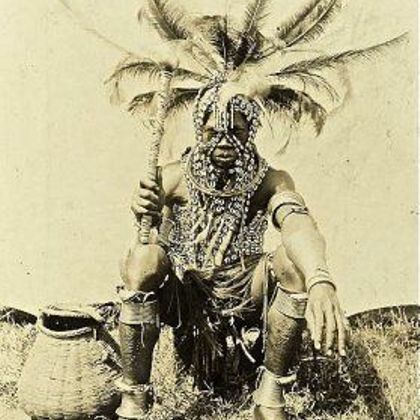
An ancient Luo tribesman in full regalia. [Photo/Pinterest]

Most Luo traditions have since succumbed to the ruthless western cultural invasion.

Such include our proverbs, most of which remain unknown to the young generation which is more interested in the white man's wisdom.
However, they are still in existence and here are some of the most popular and educative proverbs;

1. Inind tung' inind diere
The proverb translates to 'you will sleep at both the middle and the end' in the course of life and is aimed at educating people to expect anything in life.
It says that the world remains unpredictable and both bad and good takes turns in one's life, so they should be ready to face both with courage and resilience.
2. Kama iluokrie okituoe
This loosely translates to 'you should not dry up at the same place you took bath'.
Its aimed at encouraging people to always be on the move, in search of fortune and not to stay at the same place for too long.
Also, it seeks to advise people against expecting different results by doing the same thing or being at the same place.
3. Kogno achiel okto nyuogo  (A single nail cannot kill a louse)
This is aimed at promoting unity and cooperation.
It insinuates that no beneficial achievement can be made in division and people have to come together to make achievements.
#hivisasaoriginal MyLifestyle.